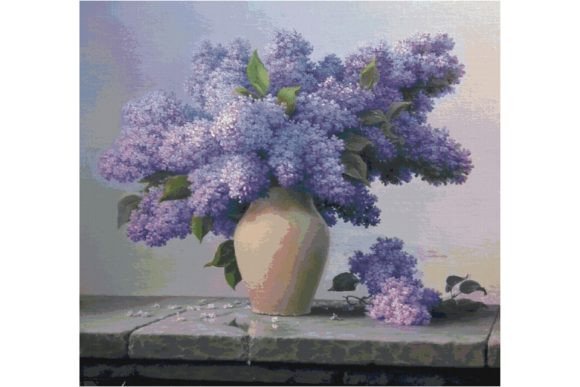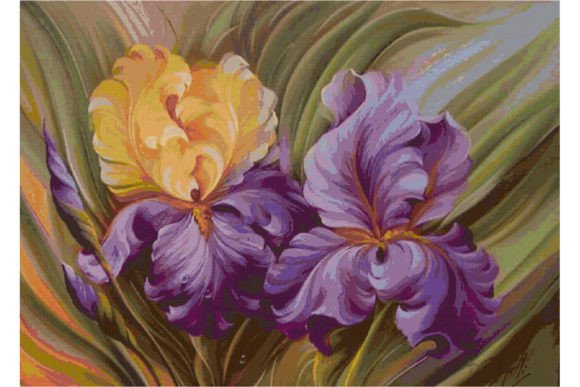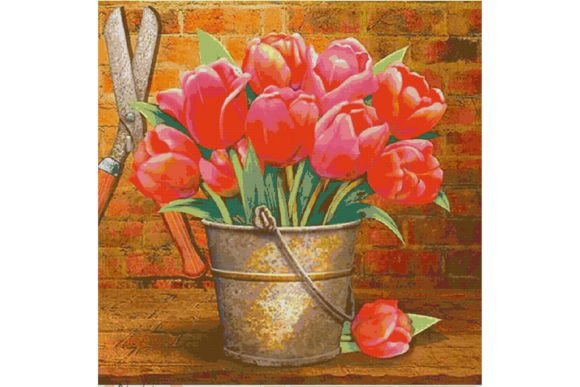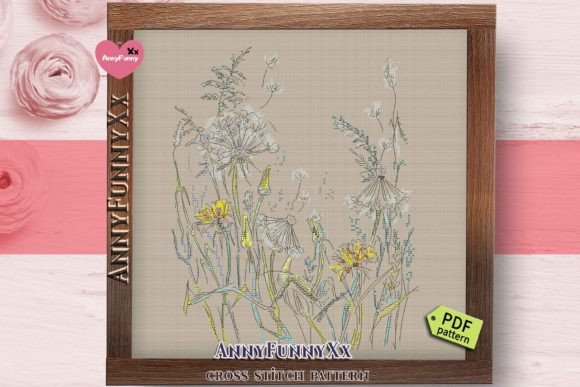
Review: Counted Cross Stitch Pattern-Flowers 107 for Business
As an embroidery designer who has spent years helping small businesses translate their brand identity into tangible, stitched assets, I approach every new design with a critical eye. It is not enough for a pattern to be pretty; it must be functional, scalable, and commercially viable. Recently, I evaluated Counted Cross Stitch Pattern-Flowers 107 to determine its potential for branded merchandise, staff uniforms, and boutique product lines. This review focuses on how this digital asset performs in real-world commercial embroidery scenarios, moving beyond hobbyist use to professional application.
First Impressions: Visual Personality and Professional Appeal
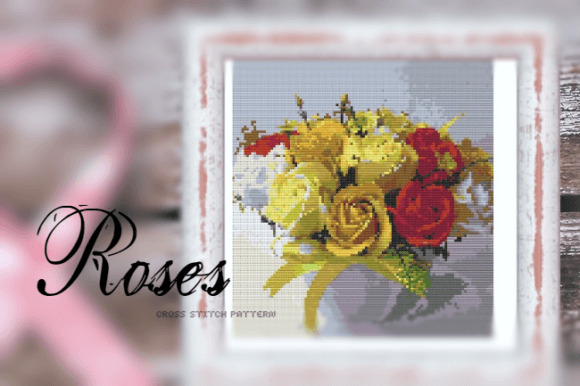
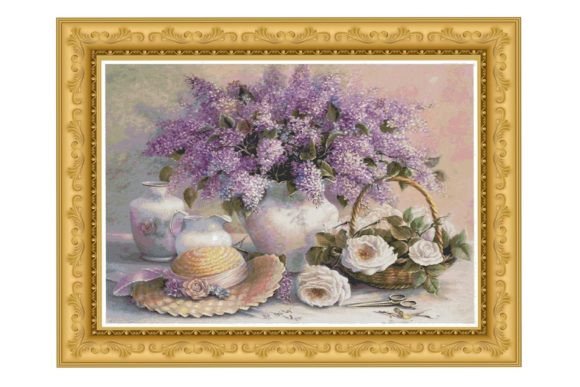
The initial assessment of Counted Cross Stitch Pattern-Flowers 107 reveals a design that balances rustic charm with structured elegance. For a small business owner, whether running a local bakery, a florist shop, or a handmade jewelry brand, the visual tone of your merchandise matters immensely. This pattern does not scream loud or aggressive; instead, it offers a friendly, handmade aesthetic that builds trust. In an era where consumers crave authenticity, a design that feels organic and carefully crafted can significantly enhance brand perception.
The description notes that these are Large Easy to Read Charts, which is a crucial detail for production efficiency. When I am preparing a printable mockup for a client or translating a concept into a machine embroidery design, clarity is key. The fact that the charts do not need enlargement suggests a thoughtful layout, allowing designers to quickly interpret the motif without straining to decipher pixelated grids. This ease of use translates directly into time savings for apparel decorators and product designers who need to move quickly from concept to prototype.
Strategic Applications for Small Business Merchandise
The versatility of Counted Cross Stitch Pattern-Flowers 107 makes it a strong candidate for various small business merch items. Here is how I envision this design performing across different product categories:
- Embroidered Patches: This is perhaps the most lucrative application. A floral motif works exceptionally well as an iron-on or sew-on patch for tote bags and denim jackets. The cross-stitch style adds texture and depth, making the embroidered patch feel premium rather than mass-produced.
- Staff Uniforms and Aprons: For cafes and boutiques, apron embroidery is a subtle yet powerful branding tool. Placing this floral design on the chest pocket or lower corner of a canvas apron adds a touch of warmth. It signals to customers that the staff cares about details, reinforcing a high-quality service experience.
- Tote Bag Design: Canvas totes are staples for eco-conscious brands. Using this pattern as a central tote bag design allows for a larger stitch count, showcasing the intricate details of the flowers. It transforms a simple bag into a walking advertisement for your brand’s aesthetic.
- Cap Embroidery: While challenging due to curved surfaces, a simplified version of this pattern could work beautifully on the side panel of a dad hat or baseball cap. It offers a fresh alternative to standard block-letter logos, appealing to a younger, trend-focused demographic.
It is important to remember that this product falls under the category of Cross Stitch Patterns and Graphics. As a designer, you are purchasing the intellectual property and the visual guide. You must then adapt this into your preferred digital embroidery file format for machine use, or use it as a hand-stitching guide for limited-edition handmade products.
Navigating Technical Challenges in Production
While the aesthetic appeal is strong, practical execution requires careful planning. Not every design works everywhere, and Counted Cross Stitch Pattern-Flowers 107 is no exception. Here are the areas where caution is advised:
Stitch Density and Fabric Texture: Cross stitch patterns inherently have a higher stitch density than satin stitch logos. If you are digitizing this for machine embroidery, you must ensure the thread colors provide sufficient contrast without creating a bulky, stiff patch. On lightweight fabrics, this density can cause puckering. Always use a appropriate stabilizer—cut-away for stretchy fabrics like t-shirts, and tear-away for stable woven materials like canvas or twill.
Scale and Legibility: The description states the chart is for 14-count fabric, but in embroidery, we deal in inches and millimeters. If you attempt to shrink this design for a tiny label or a small chest logo, the individual "crosses" may merge, losing definition. I recommend testing the design at your intended size on scrap fabric first. If the details blur, simplify the pattern by removing the smallest elements before final production.
Dark Uniforms: Floral designs often rely on pastel or bright thread colors. On dark navy or black uniforms, you may need to add an underlay or choose threads with high sheen to ensure the design pops. Without proper contrast, the intricacy of the flowers can get lost in the background fabric.
Enhancing Brand Identity and Customer Trust
Incorporating Counted Cross Stitch Pattern-Flowers 107 into your product line does more than just decorate an item; it strengthens your brand identity. Consistency in visual assets is crucial for recognition. If your logo is modern and minimalist, this floral pattern can serve as a complementary secondary element, softening the overall look. For brands focused on sustainability, nature, or wellness, this design aligns perfectly with core values.
Furthermore, offering items with this level of detailed stitching increases the perceived value of the finished product. Customers are willing to pay more for items that appear handcrafted or thoughtfully designed. Whether used as a customer gift, a loyalty reward, or a premium add-on, this design helps differentiate your custom apparel from generic competitors. It shows attention to detail, which fosters customer loyalty and engagement.
Practical Designer Notes for Commercial Use
Before integrating Counted Cross Stitch Pattern-Flowers 107 into your commercial workflow, consider these actionable steps:
- Verify Licensing: The product description states this is a PDF chart pattern purchase. It does not explicitly state commercial licensing terms for the digitized embroidery file. Always confirm with the creator if you can sell items made using this design. Do not assume commercial rights are included unless specified.
- Test in Black and White: Before selecting thread colors, print the chart in grayscale. This helps you understand the value structure and ensures the design holds up without relying solely on color for definition.
- Check Hoop Size Compatibility: Ensure the design fits within your standard hoop size. If the pattern is large, you may need a multi-hoop setup or a larger machine frame. Plan your digitization accordingly to avoid unnecessary seams.
- Create Digital Mockups: Use the PDF chart to create design assets for your online store before stitching a single thread. Place the image on photos of aprons, caps, and totes to gauge visual impact and gather feedback.
- Document Your Process: Keep records of the thread codes and stabilizer types used during your test runs. This ensures consistency if you need to reproduce the item for a bulk order.
In conclusion, Counted Cross Stitch Pattern-Flowers 107 is a versatile and aesthetically pleasing asset for the creative entrepreneur. It bridges the gap between traditional craft and modern branding. By understanding its technical requirements and strategic applications, you can leverage this design to create memorable, high-quality merchandise that resonates with your audience. Remember, the key to success lies not just in the design itself, but in how thoughtfully you apply it to your unique business context.